Friday, March 14, 2014

New Adventure Games

Here's some new adventure games recommendations from my sister:


New Adventure Games


Adventure games, where you make choices or solve puzzles to make your way through a story, used to be one of the main genres of video games.  Though now most adventure games usually have other elements (either RPG/adventure or action/adventure), here's some classic-feeling games for those that still love adventure games.


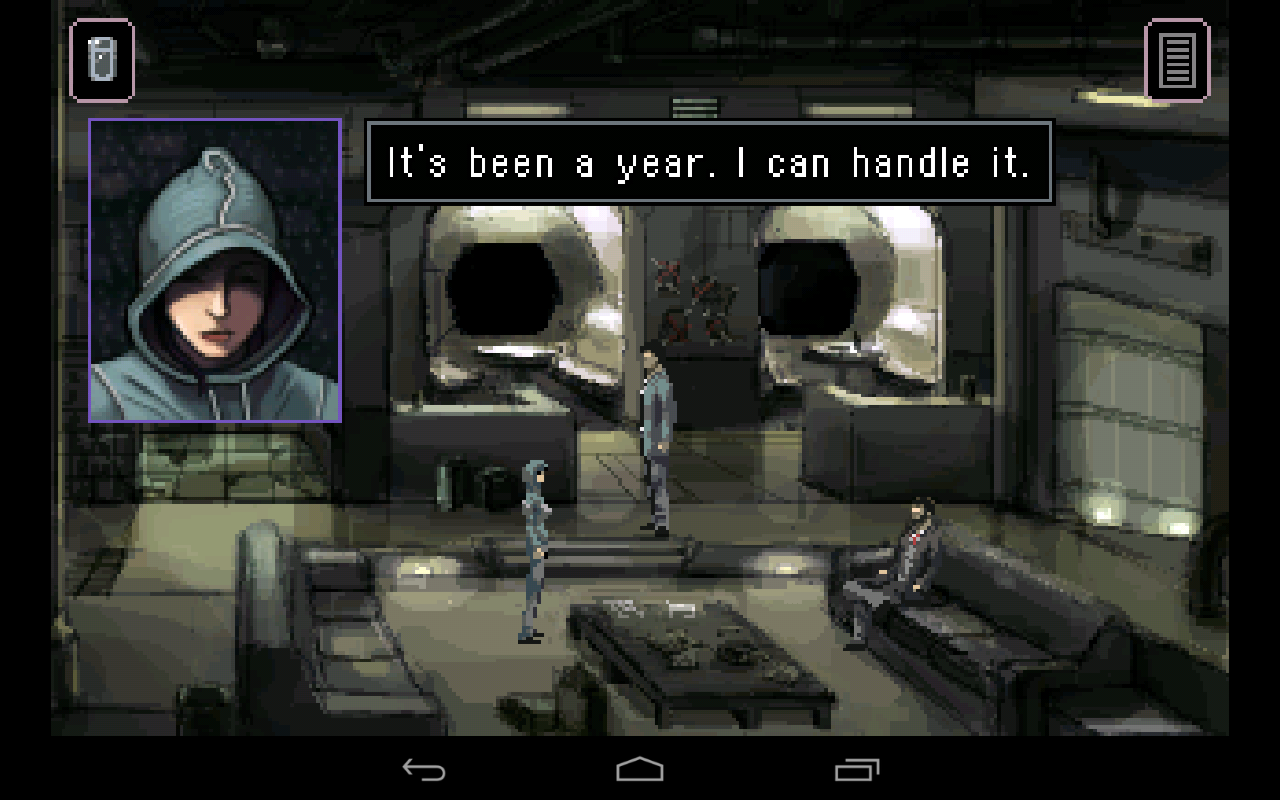
Gemini Rue

Screenshot_2014-03-13-12-48-26.png

If cyberpunk/mind-bending/noir would be one of your favorite Netflix genres, you definitely need to give Gemini Rue a try.  Its retro graphics feel a little austere at first, but the twisting story and evocative soundscape more than make up for the simple graphics.  Some of the puzzles are a little tricky, but that just adds to the old-school appeal.  ($5-10, PC, iOS, Android)


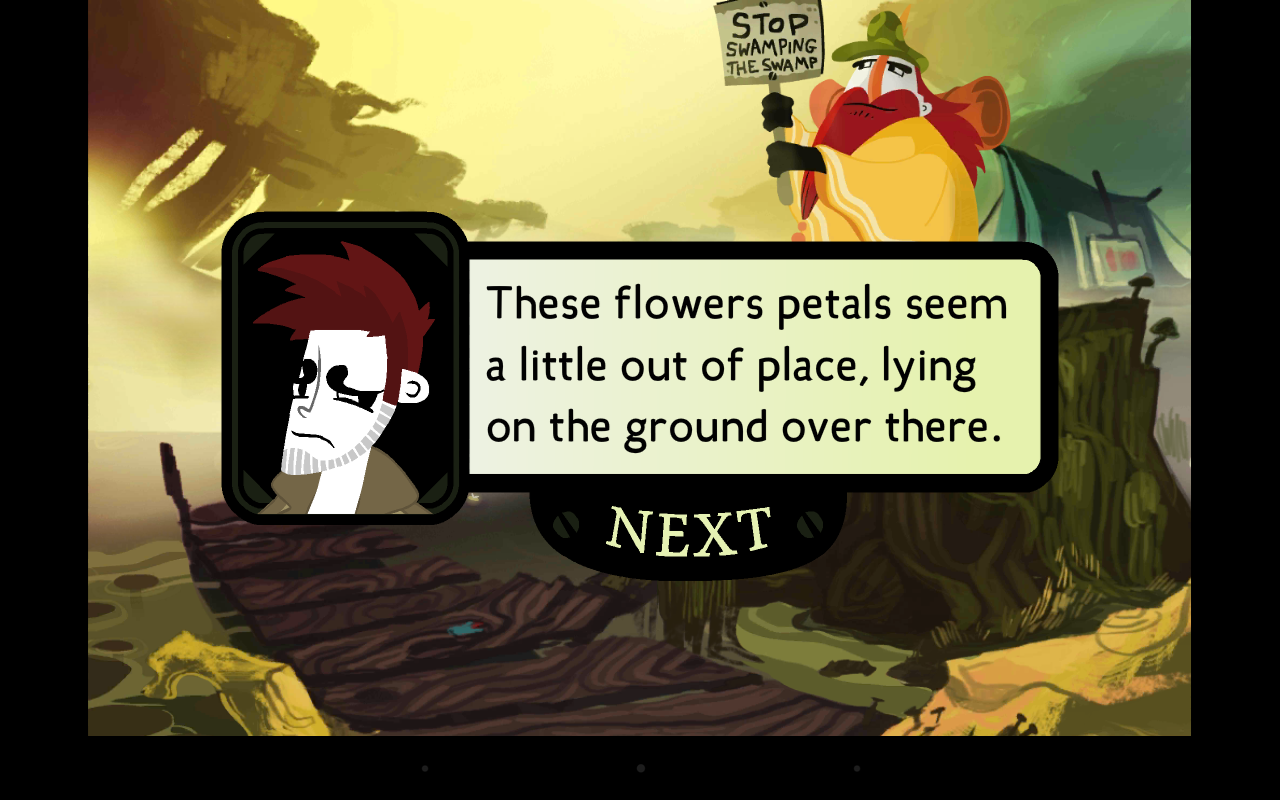
Detective Grimoire

Screenshot_2014-03-13-12-51-28.png

This detective-adventure game incorporates deduction as part of the puzzles you solve in order to find a murderer at a remote swamp tourist attraction.  With dry humor, whimsical graphics, and plenty of interesting evidence to sift through, this is an entertaining mystery adventure.  The only downside?  At around 4 hours of gameplay, it’s a little short, but it’s also inexpensive.  ($4-7, PC, Mac, Linux, iOS, Android)


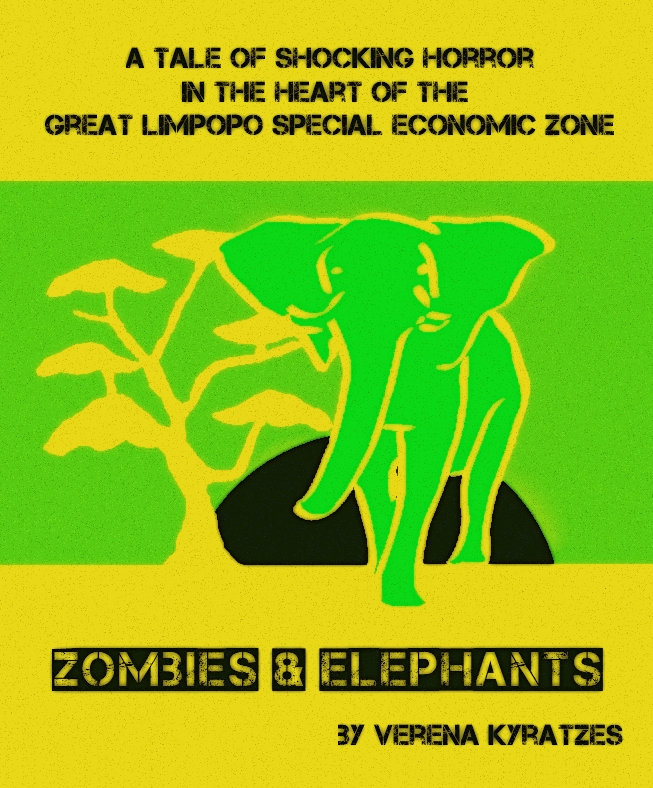
Zombies and Elephants

zombie-elephants-screenshot.jpg

Expressive, suspenseful prose and haunting symbolism set this twine-based text adventure apart from the rest. Warning: Contains zombies and elephants. (Free, all platforms)


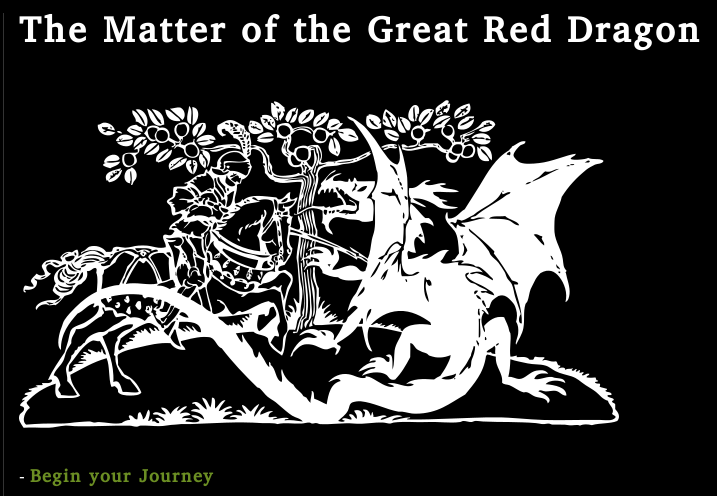
The Matter of the Great Red Dragondragon-screenshot.png

This post-post-post-modern Twine text adventure tale both examines and revels in the save-the-world fantasy tale. (Free, all platforms)

Tuesday, March 11, 2014

Do your moral values and videogame preferences correlate? Help us find out!

You might have seen this survey about how your political compass results and favorite game genre might be correlated. I found it really interesting, but some of my friends pointed out that the political compass has a lot of weirdly-worded and loaded questions. I was also wondering how they measured a person's favorite videogame genre. A friend of mine suggested that if I wanted to, I could do a similar survey using the Moral Foundations Questionaire. Seeing as how half the work of making a similar survey was already done, I found a videogame preferences survey in a master's thesis about personality and videogame preferences, mashed the two together in a Google form, and started trying to get participants.

BOTTOM LINE: I'd love for you to take this survey on morals and videogame preferences. We have 69 responses so far and I'd love you to make that 70, 75, or even 100. Stay tuned for analysis!

Thursday, February 13, 2014

Why does Bravely Default need freemium crap?

Bravely Default is the "old-school inspired" JRPG that everyone is playing on their 3DSs. The game has a very traditional storyline and a job system that harkens back to early Final Fantasy games. One of your characters has his village destroyed by the evil forces you need to stop. Unlike traditional JRPGs, Bravely Default has you rebuilding the village with freemium-type techniques.


How it works: Each day you can get more villagers from street/netpass (either passing by people in real life or online). You use these villagers to rebuild and upgrade buildings like an armor shop or accessory shop in a menu separate from the overworld. These shops can be accessed in-game in towns and before bosses. High-level upgrades take a lot longer, but if you put multiple villagers on one project it won't take as long. Oh, and time only passes if you are playing the game or have it suspended in sleep mode on your 3DS. This is basically due to the limitations of the 3DS system, which only allow one thing running in the background at a time, but I think this is the reason they have this here at all.

If you're playing Bravely Default and you want to rebuild the town, your best bet is to swear fidelity to the game and always have it in sleep mode. You could play a different game on your 3DS, but right afterwards, you'd want to switch to the game so the timers on your upgrades can keep clicking down. In other words, it gets you coming back to the game; it's "sticky."

But why does Bravely Default need to use these tactics? I've already given them my $40, why do they care whether or not I finish the game? The designers here are in it for the long haul. When you have a game in sleep mode, it shows up for people you streetpass as the game you're currently playing (free exposure). If you're constantly playing the game, you're more likely to talk about it (more free marketing) and maybe even finish it. Since it's the first in a series of games, it's in their best interest to get to you beat this really long game so in a year or two you'll want to buy the sequel.

Of course, that's just my armchair analysis. I'd love it if developers would talk about the data behind freemium techniques like city building and how it affects player attrition and marketing.

Thursday, January 30, 2014

All games have values and send messages about those values

I was discussing with my husband how Redshirt made some of its players uncomfortable for having sexual bigots as NPCs you can't block (I think that's what went on? Also I want to play this game even more now). In real life you can usually block annoying people online, and it usually doesn't impact your social life too much, unless they're people you know in real life. By having harassment as a sometimes unavoidable occurrence, this game was saying that sometimes you have to pay a price for social status, which is being harassed online, and often there's nothing you can do about it (but often IRL there are things you can do about it, from blocking offenders to changing your e-mail address).

Every game has some type of value assumption. In Chess, once the king has been captured, the other pieces are powerless (just like a real monarchy?). In Go, preserving and marking the most territory is the way to win. I know I'm not the first person to notice that game mechanics convey ethical information, but it's still kind of fun to take things apart and look at their assumptions about the world.

Mario: Other animals in the world are hostile. You can defeat them by becoming higher than them. You can only move forward.

Match-3 games: The world is a better place when you group identical objects together. Spending your time grouping these objects is worthwhile.

TinyWings: Even if your dreams are impossible, aspiring to them is still fun.

Many JRPGs: If you come across an insurmountable boss/obstacle, constant practicing will let you beat him eventually.

Most "freemium" games: Time = money

I find that story-based games are more difficult to classify this way. Much of the time, the values of point-and-click adventures rely on what the story is saying and not on the level of mechanics. In some ways, mechanics-based values feel like a deeper way of communicating; it's not just that someone told you that everything in this world would try to kill you, it's that you experienced it that way.

Tuesday, January 28, 2014

Radiant Historia is actually pretty linear

Radiant Historia is often lauded for being "non-linear." It's a JRPG for the Nintendo DS in which your character experiences "standard" and "alternate" history of his time, and can revisit events in the past with his knowledge from the future. It's a fairly cool premise, I mean, instead of "you have a sword save the world!" it's "you have the power to change certain aspects of the past based on the future so save the world!"

It's almost as non-linear as a novel, except you can't peak at anything further ahead than your current point in the game. I guess I felt excited that I could make choices in the game, but there were only a few choices that actually affected the ending. Most of those choices are in sidequests that are easy to miss (some of which I did miss. Don't worry, I watched the True Ending online). The main storyline choices are "ending that lets you keep going" and "bad ending." I wish that there had been more branches and a better illusion that there wasn't always one right choice. Maybe you need a less epic story to have multiple "okay" endings; where the world ending because of something you did isn't the default "wrong."

Radiant Historia has a fairly interesting battle system. Enemies are in a grid and certain powers can move them around to overlap, and when enemies overlap you can hit both of them at once. Also, if you hit an enemy many times in a row, successive attacks do a little more damage. You can also change the turn order to get everyone doing stuff in exactly the right order. I don't think I properly appreciated this system until a walkthrough got me to string ten attacks in succession (and I think you get more XP if you do more attacks in a row). It makes me sorry that I didn't experiment with it more earlier. 

If you're a fan of JRPGs, I recommend this one, especially if you liked Chrono Trigger, but don't expect a bazillion endings. 

Wednesday, January 22, 2014

Parlor game variants for a baby shower


I've been looking for games that are somewhat baby-themed, so you'd play them at a baby shower, but not really tasteless like the one with plastic babies in ice cubes where you want to be the first whose "water" breaks. Here are some variants on parlor games that I made up and pass my taste test:

Baby Alphabet (based on Traveling Alphabet):
The first player thinks of a baby name. Let's say she says "Jenny." The next player has to think of a verb and a noun that begin with "J" that Jenny, as a baby, might do. In this example she might say "Jenny joins jisaw pieces." Then the same player thinks of a baby name beginning with the next letter of the alphabet, like "Kaleigh." You can play that if a player takes to long to think, then they're out, or you could play noncompetitively.

Infantile Poetry (based on Crambo):
Beforehand, pick a few baby-related nouns and a few childrearing questions. Mix them up, and choose two noun-question pairs for every 3-4 people, who are then assigned to write a rhyming poem that uses the noun and answers the babyraising question. For example, you might pick out "stroller" and "Should you let your baby cry it out?" Players have five minutes to write their poem. The sillier the better!

Blind Conditionals (based on Conditionals):
The first player writes down the beginning of an "if" or "when statement" (preferably having to do with childbirth and childrearing). The first player folds down the paper so her statement is not visible, and the second player completes the statement (in the conditional or future tense) without looking at the first part. This game's success depends somewhat on the absurdity of the remarks, so I'm not sure how it would fare as a baby shower game.

Example:
If you're at home and labor starts
spitup will get everywhere.

Sources:
The Games Bible - for Traveling Alphabet and Crambo (amazon)
A Book of Surrealist Games - for Conditionals (amazon)

Friday, January 17, 2014

Broken Age Act 1 is satisfying, if short. A feminist reading of the ending.

I finished playing Broken Age Act 1 this morning. The ending was a clincher and I'm excited for Act 2. I'm happy to say that I figured out all the puzzles except for one on my own (maybe that means other people would find them too easy?). I've played some other adventure games recently, and one thing Broken Age did well was having the story move along enough that I felt engaged with it. I played Gabriel Knight over Halloween and it also slowly revealed things so that I wanted to keep playing to see where the story went. It had narrative urgency. Broken Age wasn't quiiiite as page-turny, but it was much better than the newer Sam & Max games and the Wallace and Gromit point-and-click adventures (which I stopped playing after an hour or so and feel no need to go back to).

So, not only does Broken Age have narrative urgency, which I consider important in any story-based game, but it also had an interesting narrative--two worlds with details to indicate that they have some yet-unrevealed histories; the feeling that the world is bigger than the little parts you're seeing. The game isn't so dominated by humor that it feels forced, although at times I felt like I was growing out of the humor it had (hanging by your underwear and tree barf are only so funny at my age). I recommend the game, and that you keep playing to the end of Act 1!

Okay, I wanna discuss the ending! Major spoilers!

SPOILERS


MAJOR


Vella starts out sacrificed to this Mog Chothra, whom she escapes. Shay escapes mother computer to save creatures from hostiles... but his wolf guide seems to always want to leave before he picks the last one. Shay's ship sustains a hull breech in the last rescue. When Vella conquers Mog Chothra, Shay comes out of it. Basically, his ship was actually this monster, and when he thought he was saving girls, he was acting as a monster eating them. If I understand that right.

I was contemplating this situation. It lends itself to many interpretations, but a feminist/post-colonialist interpretation could see it as how those with more power are unaware of how they oppress those with less power, because they essentially live in different worlds. You really get a sense of how Shay thought he was really helping those "beings" he rescued. I felt sympathetic when he wanted to save every last one! But I think in the same way we can look back on, say, forcing indigenous people into Christian missions, or telling women they're inherently better in some ways because they're women (i.e., benevolent sexism), to one group they look like they're being helpful, but to the other they're not. I felt really insightful when I thought it, but now that I've written it down it seems kind of plain. Rampant Coyote saw it as a critique of the game industry, and I'm curious if he'll still see it that way after he plays the ending. What about you, who are reading this spoilery bit? I'm curious to know what other people thought of the ending.